.png)

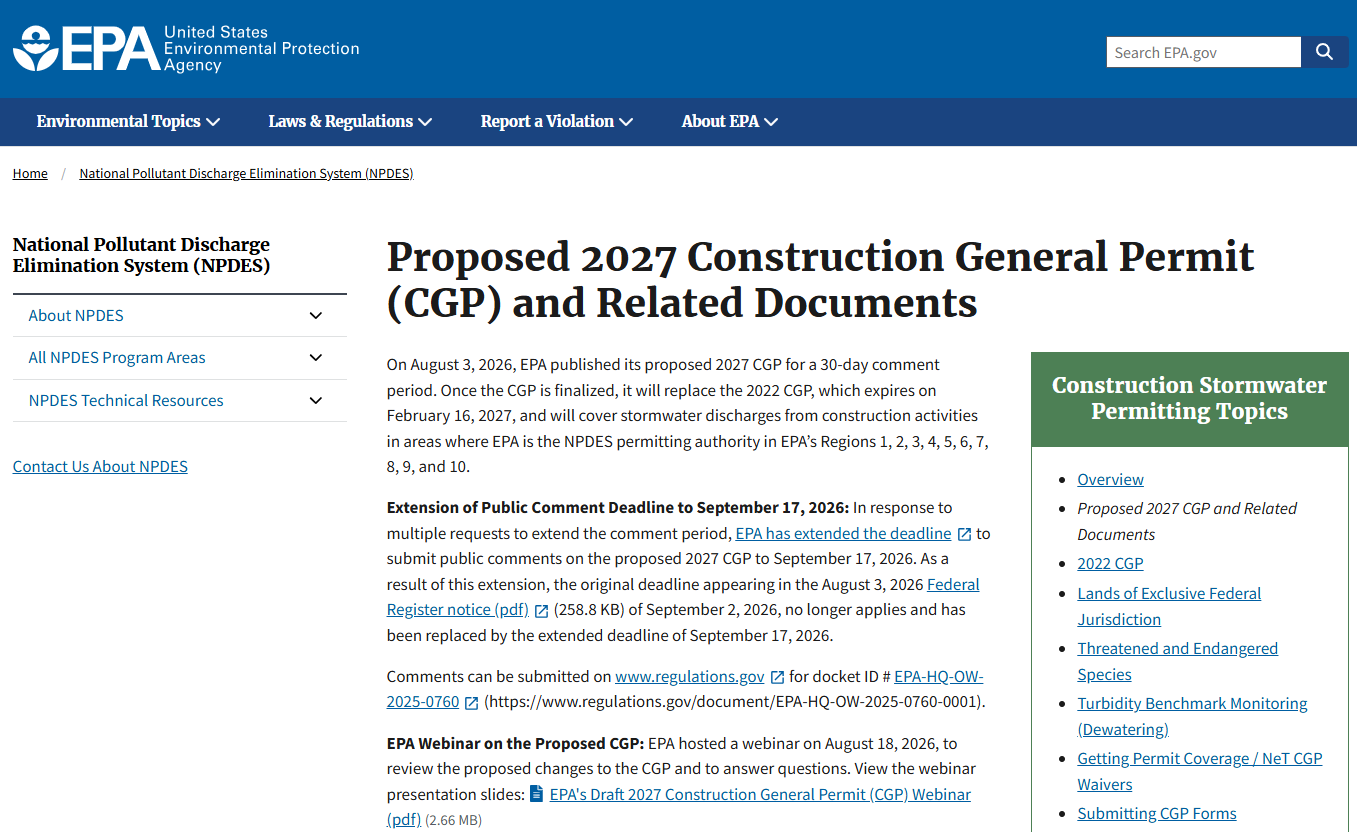

If you have been keeping an eye on national environmental news this month, you may have seen that the U.S. Environmental Protection Agency (EPA) recently released its proposed 2027 Construction General Permit (CGP) for public comment.
When federal regulations make headlines, it usually sends a wave of panic through local development and construction teams. But before you start ripping up your current Stormwater Pollution Prevention Plan (SWPPP), let's take a breath and look at what this proposal actually means for projects here in California.
What is actually being proposed federally, and why?The EPA’s current 2022 federal permit expires in February 2027, so the agency is preparing its next iteration. This time around, a significant portion of the proposed changes are a direct response to the recent Supreme Court decision in City and County of San Francisco v. EPA.
Because the Supreme Court limited the EPA's ability to enforce vague "end-result" water quality standards, the EPA is proposing to replace broad, open-ended language with specific, observable indicators. If finalized, inspectors would be looking for concrete visual triggers—like floating solids, oil sheen, discoloration, odor, or construction debris—to determine if a site is causing water quality problems.
The proposal also aims to modernize the process by requiring an electronic copy of your SWPPP to be submitted right alongside your Notice of Intent (NOI), and introduces new stabilization requirements for sediment basins before they are used for the first time.
The federal CGP vs. California's state-issued CGPHere is the most important takeaway for local builders: The federal CGP does not directly apply to the vast majority of construction sites in California.
The EPA only serves as the direct permitting authority in a handful of states (like Massachusetts and New Mexico) and on specific federal jurisdictions. In California, the State Water Resources Control Board holds the authority and issues our specific state-level CGP (currently the 2022 California CGP).
Unless your construction project is located on a military base, federal land, or Indian Country within California, this newly proposed 2027 EPA permit will not change your day-to-day compliance requirements or your QSP inspection checklists. You are still bound by California's state permit.
Why it is still worth watching if you operate in CaliforniaEven if the federal permit doesn't govern your specific site, we always keep a close eye on EPA movements because they set the baseline.
When California eventually drafts its next state-level permit renewal, the State Water Board will use the federal CGP as a primary reference point. The EPA's shift toward "observable condition" triggers and electronic SWPPP mandates is a strong indicator of where California's regulatory framework is heading in the coming years. By watching the federal level now, we can anticipate and protect your projects from regulatory shock later.
How to submit a public commentThe EPA is actively seeking feedback from the construction industry before finalizing these rules. Due to heavy industry interest, the public comment deadline has been extended to September 17, 2026.
If you or your development team would like to submit a formal comment regarding the proposed dewatering limits or stabilization timelines, you can submit your feedback electronically through the federal docket (Docket ID No. EPA-HQ-OW-2025-0760) on the EPA's official 2027 CGP webpage.
(Disclaimer: This permit is currently in the draft proposal phase. Specific conditions, requirements, and enforcement mechanisms are subject to change based on public feedback. Always consult with your environmental compliance partner to confirm your current regulatory obligations.)
👉 Want to stay ahead of shifting water regulations without doing the heavy reading yourself? Subscribe to our newsletter for rapid, plain-English regulatory updates, and let us handle the compliance so you can handle the work.
If it involves water, it involves us.


