.png)
.png)

You are walking the site, the project is finally running on schedule, and then it happens: a California Water Board inspector shows up at the front gate.
If you are managing an industrial facility or a construction site in California, you already know that Stormwater Pollution Prevention Plan (SWPPP) compliance is not optional. The fines are steep, and the threat of third-party lawsuits is very real. But maintaining compliance shouldn't feel like a constant state of panic.
At Water Environmental, we believe that good environmental consulting isn't about dropping a massive, confusing binder on your desk and walking away. It’s about predicting and preventing problems so your project stays on track.
If you want to keep the inspectors happy and your site running smoothly, start by checking these three common SWPPP violations—and how to fix them today.
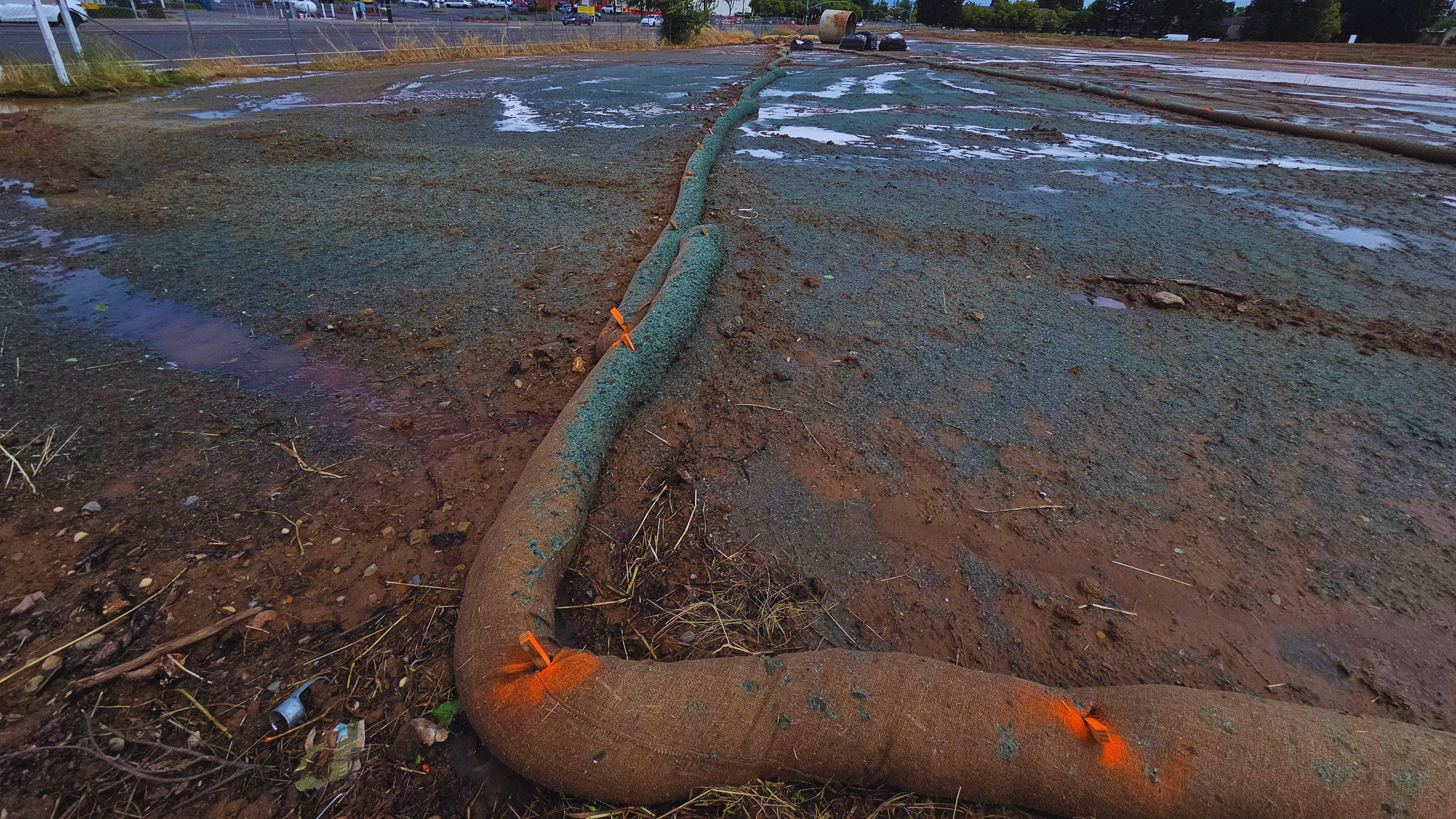
1. The Flattened Perimeter (Mangled Wattles & Silt Fences)
The Violation: Fiber rolls (wattles) and silt fences are the first line of defense for keeping sediment from leaving your site. But on a busy site with heavy machinery, these Best Management Practices (BMPs) frequently get run over, crushed, or moved out of the way and never put back. An inspector will immediately flag a flattened wattle because it is essentially useless. The Quick Fix: First, ensure perimeter controls are installed correctly (trenched in, not just resting on the dirt). Second, create clear, designated traffic paths for heavy equipment that avoid these barriers. If a wattle must be moved for access, make it a strict end-of-shift policy that the last guy out puts it back.
2. Neglected Storm Drain Inlets
The Violation: Drain inlet protection is critical, but it is not a "set it and forget it" solution. A very common violation is a drain inlet filter that is overflowing with sediment, trash, or leaves. When these filters clog, they can cause localized flooding on your site, or worse, they break and dump a concentrated load of pollutants directly into the municipal storm system. The Quick Fix: Make inlet inspection part of your routine pre- and post-storm checklist. If a silt sack is more than one-third full, it needs to be emptied or replaced immediately. Keep backup inlet protection materials fully stocked in your site's storage container so crews aren't waiting on a delivery when the rain starts.
3. Poor Housekeeping & Uncovered Stockpiles
The Violation: Inspectors love to look at your staging areas. An uncovered dirt stockpile on a windy or rainy day is an easy citation. Similarly, leaking hydraulic fluid from a parked backhoe, overflowing trash dumpsters, or uncontained port-a-potties are massive red flags that tell an inspector the site lacks basic environmental oversight. The Quick Fix: Cover all active stockpiles with secured plastic sheeting or hydromulch before a rain event (and at the end of every work day during the rainy season). Place drip pans under all heavy equipment when parked, and ensure you have fully stocked spill kits visibly stationed around the site.
Never Panic When the Inspector Arrives
Environmental compliance in California can be a heavy burden, but you don't have to carry it alone. At Water Environmental, we combine the advanced engineering tools and rigorous standards of an industry giant with the agility and personal care of a family business.
We ensure your paperwork is “Renewal-Ready” year-round, so you never have to deal with the Water Board directly.
Want to make sure your site is bulletproof? Let’s take 15 minutes to review your current setup. Let's handle it together.
If it involves water, it involves us.


